
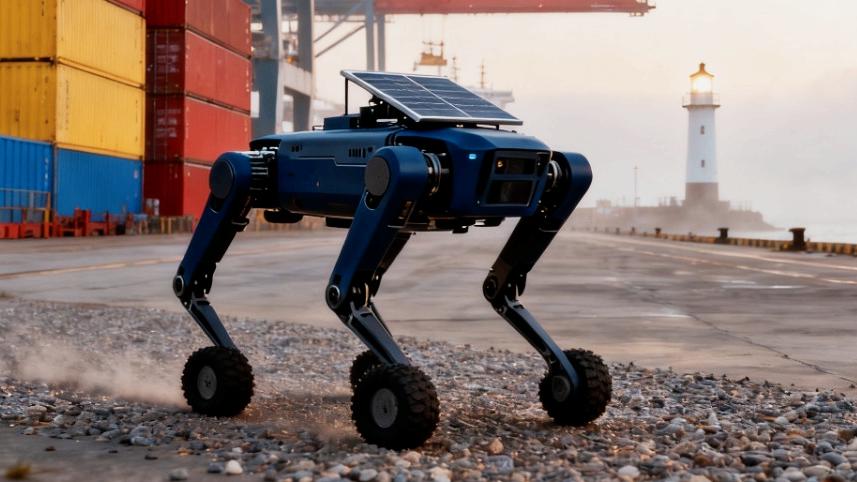
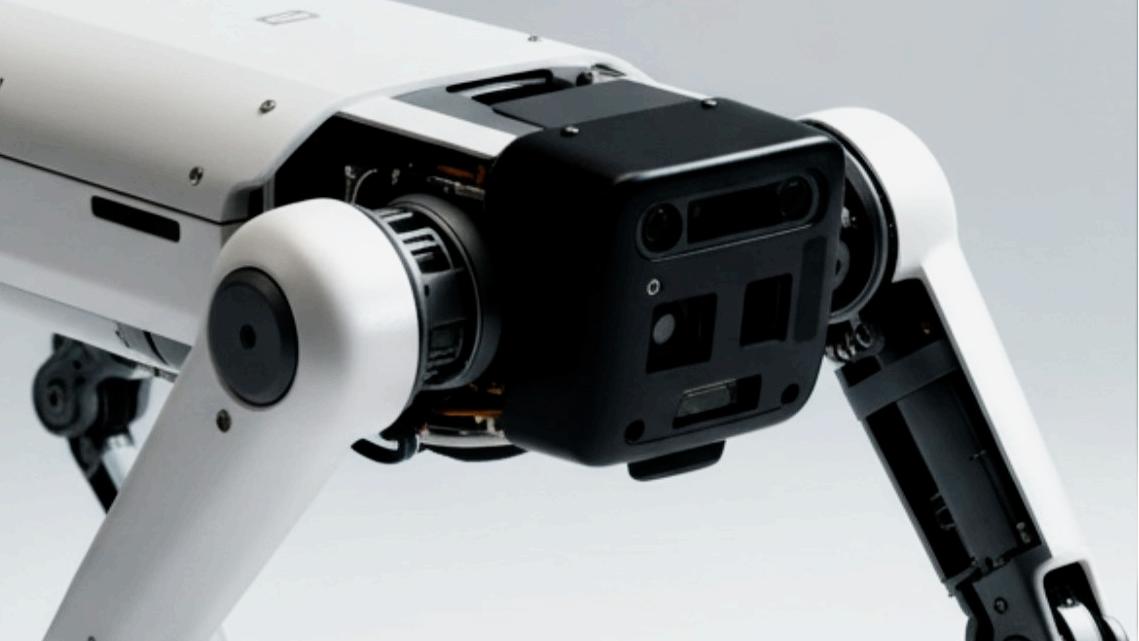
Primarily uses embedded ARM CPUs, running reinforcement learning inference models to achieve a 1kHz execution frequency. It processes data in real-time from joint encoders, IMUs, and foot sensors, rapidly calculating torque output for each leg to achieve dynamic balance and resistance to impact disturbances.
The brain performs environmental perception and understanding, enabling navigation and path planning, identifying and avoiding obstacles. It can also execute advanced tasks such as "patrolling," "following," or "finding a target object." Common industry typical solutions: Solution 1: Uses a 100TOPS compact computational brain primarily responsible for perception and navigation functions. Solution 2: Utilizes an externally attached high-performance computational brain of 200TOPS or more, suitable for perception and navigation in complex outdoor environments.
Cerebellum: Employs a T40 8-core ARM-based "cerebellum," combined with a real-time system, EtherCAT, and CAN FD to implement a fast-response controller ensuring the motion stability of the quadruped robotic dog.
Brain: Integrates the high-performance perception and decision-making "brain" capability of T200 200TOPS or T300 300TOPS to achieve fully autonomous operation.