

Equipping a robot with a camera enables it to "see" the world like humans do?
Not exactly.
"Perceiving" pixels and "understanding" the world are two entirely different things.
Today, let's talk about the robot's "Perception System".
More Than Just "Eyes"
A robot's senses are richer than we imagine.
Vision Sensors: Simulating human vision.
LiDAR: Constructing a 3D model of the environment.
Inertial Measurement Unit (IMU): Providing support for motion control.
Force/Torque Sensors: Ensuring precise force control.
These bring a massive stream of raw data to the robot.
But they also introduce a significant challenge...
Receiving Much, Understanding Nothing
Imagine the world in your eyes being billions of pixel points / 3D point clouds, not objects;
countless sound wave curves, not sounds.
And this is the world robots initially face.
To move from chaos to order,
the first step is "Sensor Fusion".
Piecing together all sensory information
to form a unified and accurate initial picture.
Lingjing Zhiyuan: Precision Fusion
Traditional fusion often fails due to inconsistent data timestamps.
To handle such massive, real-time fusion tasks,
a robot needs a powerful physical core.
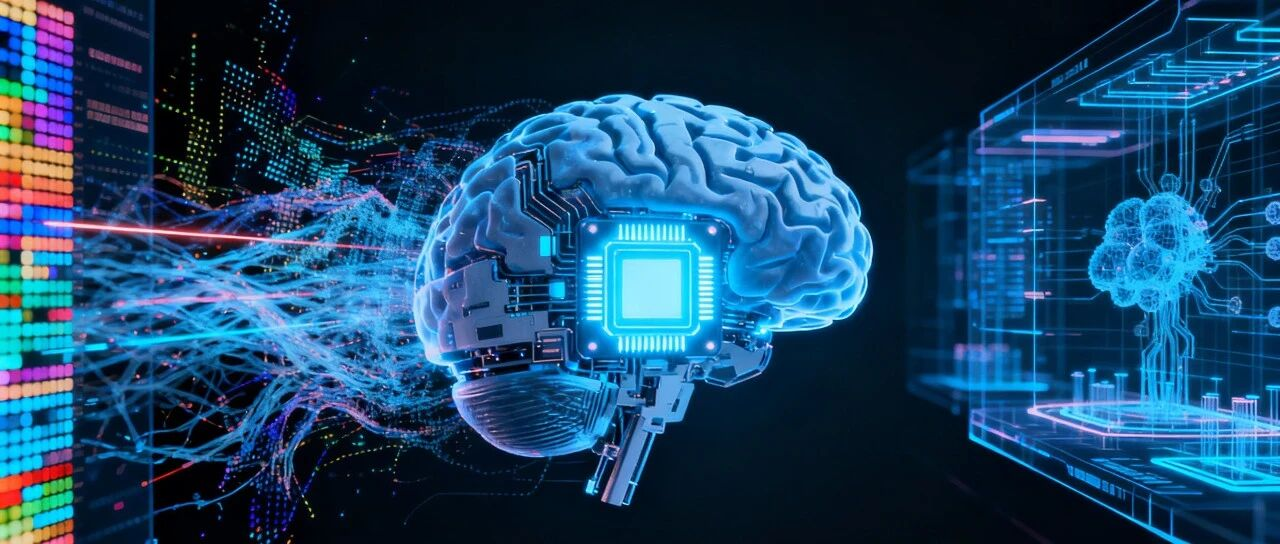
We call it — the Silicon-based Brain!
Lingjing Zhiyuan's dedicated development of the "Silicon-based Brain"
Utilizes unique hardware acceleration and synchronization technology
to ensure all data from cameras, LiDAR, IMU, etc.,
achieves microsecond-level precise alignment in time and space.
This is the first step in enabling the robot to "see clearly".
But seeing clearly is not enough; it must also "comprehend".
The Computational Foundation from "Seeing Clearly" to "Comprehending"
"Comprehending"
means more complex AI algorithms
for recognition, understanding, and even prediction.
Enabling the robot to no longer passively respond to commands,
but to predict the consequences of its actions
and make smarter decisions.
All this requires immensely powerful computing capability behind the scenes.
The "Silicon-based Brain" developed by Lingjing Zhiyuan
can provide up to 1500 TOPS of robust computing power for large model inference,
serving as the solid foundation that supports its completion
of the journey from "seeing" to "comprehending".